
What Is Raffia? The Natural Fibre Behind the Noosa Bag
The Story of Raffia — and the Noosa Bag
Before synthetic fibres existed, before fast fashion was even a concept, people were weaving raffia. Here's the story of one of the world's oldest natural materials — and why we chose it for our newest bag.
When we started working on the Noosa Bag, we knew we wanted a natural material — something with texture, character, and a story worth telling. We considered a few options. We kept coming back to raffia. Not because it's trending, though it is. Because it's honest. Because it has been made by hand, by communities around the world, for centuries. Because it ages the way leather ages — it becomes more itself with use.
Here's everything you need to know about raffia, where it comes from, how it's made, and why we think it belongs alongside leather in a bag built to last.
What is Raffia?
Raffia is a natural fibre harvested from the leaves of the Raphia palm — a tall, tropical palm tree that grows across Madagascar, Southeast Asia, and parts of South and Central America. The long, ribbon-like leaves of the raffia palm are stripped, dried in the sun, and split into fine, workable fibres. Those fibres are then twisted, woven, or braided into everything from hats and baskets to bags and mats.
It's one of the oldest plant fibres in human use. Communities in Madagascar have been weaving raffia for generations — it's embedded in local craft traditions, trade practices, and cultural identity.
The word raffia comes from the Malagasy language, spoken in Madagascar, and means something closer to 'the binding material.' Which feels exactly right.
Raffia is a renewable resource, harvested without harming the palm. The tree continues to grow, produce new leaves, and be harvested again — season after season.
Is Raffia Sustainable?
Yes — and credibly so, which matters to us. Raffia is a 100% natural, biodegradable, and renewable material. Unlike synthetic fibres, which are petroleum-based and persist in the environment for centuries, raffia breaks down naturally at the end of its life. It leaves no microplastics, no chemical residue.
The harvesting process is non-destructive. Raffia palm leaves are cut without damaging the tree, which continues to grow and produce new growth. In regions where raffia is a significant craft tradition — particularly Madagascar — its cultivation supports agroforestry practices that protect local ecosystems and prevent deforestation.
For us at Stitch & Hide, raffia fits naturally alongside the eco-certified leather we've always used. Both are natural materials, responsibly sourced, designed to last. The Noosa Bag is a coming together of two traditions — woven plant fibre and tanned leather — that have been part of human craft for thousands of years.
How is Raffia Made into a Bag?
The process begins with the leaves of the raffia palm. They're harvested by hand, then dried — usually in the sun — to set the colour and make the fibres workable. The drying process can take several days, and the resulting fibre is strong, flexible, and naturally slightly lustrous.
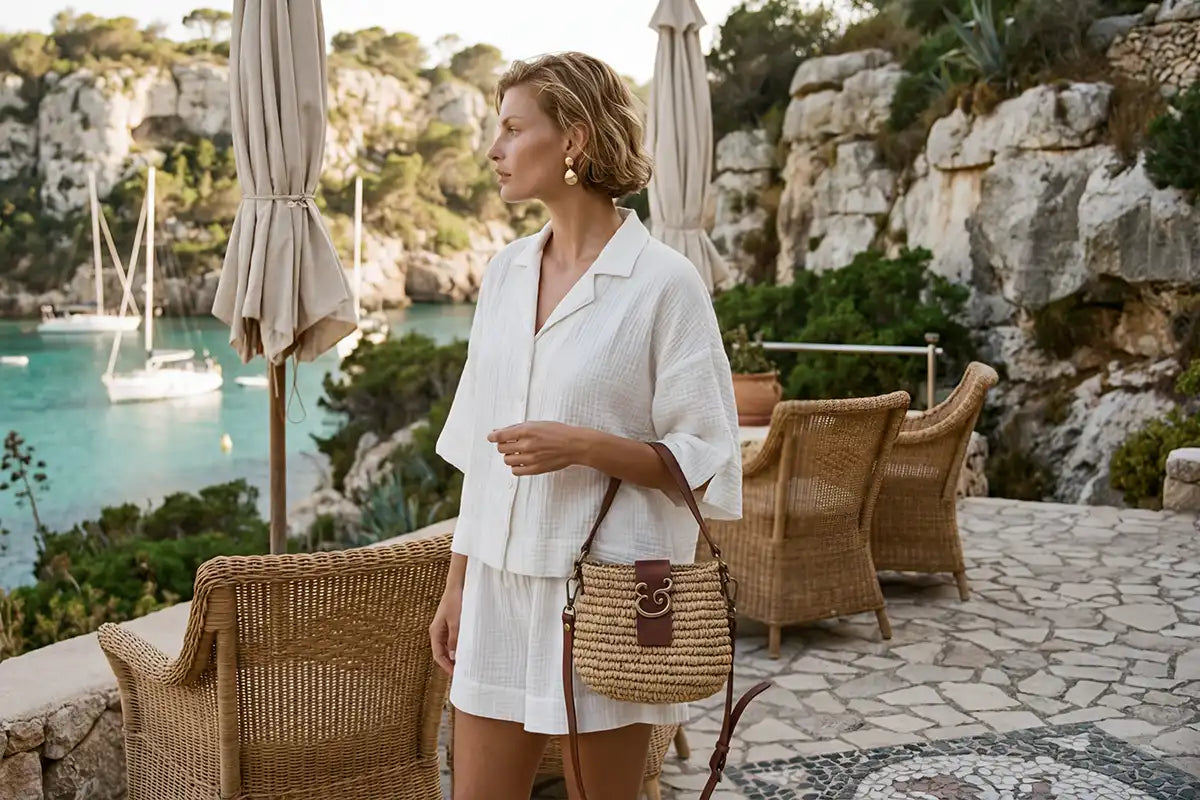
From there, the fibres are twisted into yarn or kept as flat strips, depending on the weaving technique being used. In the Noosa Bag, the raffia is hand-woven into the body of the bag — a process that requires skill, patience, and the kind of attention to craft that can't be replicated by a machine.
Because raffia is a natural material, each piece carries its own variation. The colour might shift slightly from one section of the bag to another. The texture may be tighter in one area, looser in another. These aren't imperfections.
No two Noosa Bags are identical. The variation in the weave, the subtle differences in colour — these are proof that it was made by a person.
Why Raffia with Leather?
The Noosa Bag pairs a handwoven raffia body with vegetable-tanned leather trims — our signature eco-certified leather, sourced from Gold-rated Leather Working Group tanneries.
The pairing is more than aesthetic. Both materials share the same essential quality: they age. Vegetable-tanned leather develops a patina over time — it softens, deepens, and becomes more beautiful with use. Raffia does something similar. The fibres settle and soften with handling. The bag becomes more itself the more it's carried.
We also chose this combination because both materials are honest. No plastic components. No synthetic coatings. A bag you can carry for years — and compost at the end of its life, if it ever gets there, which we don't expect it will.
How Do You Care for a Raffia Bag?
Raffia is surprisingly robust, but it benefits from a little attention — the same approach we recommend for leather.
- Keep it dry. Raffia doesn't like prolonged moisture. If it gets caught in a shower, let it dry naturally — away from direct heat or sunlight.
- Spot clean only. For marks or dirt, use a soft, barely damp cloth and work gently with the weave. Avoid soaking.
- Store it stuffed. When not in use, stuff the bag lightly with tissue paper to help it hold its shape. Keep it away from direct sunlight, which can bleach the natural fibres over time.
- Let it breathe. A cotton dust bag is ideal for storage. Avoid plastic, which can trap moisture.
With the right care, a well-made raffia bag lasts for years. The Noosa Bag is designed to be that bag.
Where Can I Buy a Raffia Bag in Australia?
The Noosa Bag is available now at stitchandhide.com. It's a limited run — handwoven raffia with vegetable-tanned leather trims, made with the same commitment to craft and sustainability that goes into every piece in our range.
Because it's made from natural materials and handwoven in small quantities, stock is limited. No two bags are identical. When this run sells out, we'll consider another — but that's always a conversation about materials, craft, and timing. Never about volume for its own sake.
→ Shop the Noosa Bag
→ Read about our leather
→ Our sustainability commitment